How to market your SaaS on TikTok and Instagram (without becoming a content creator)
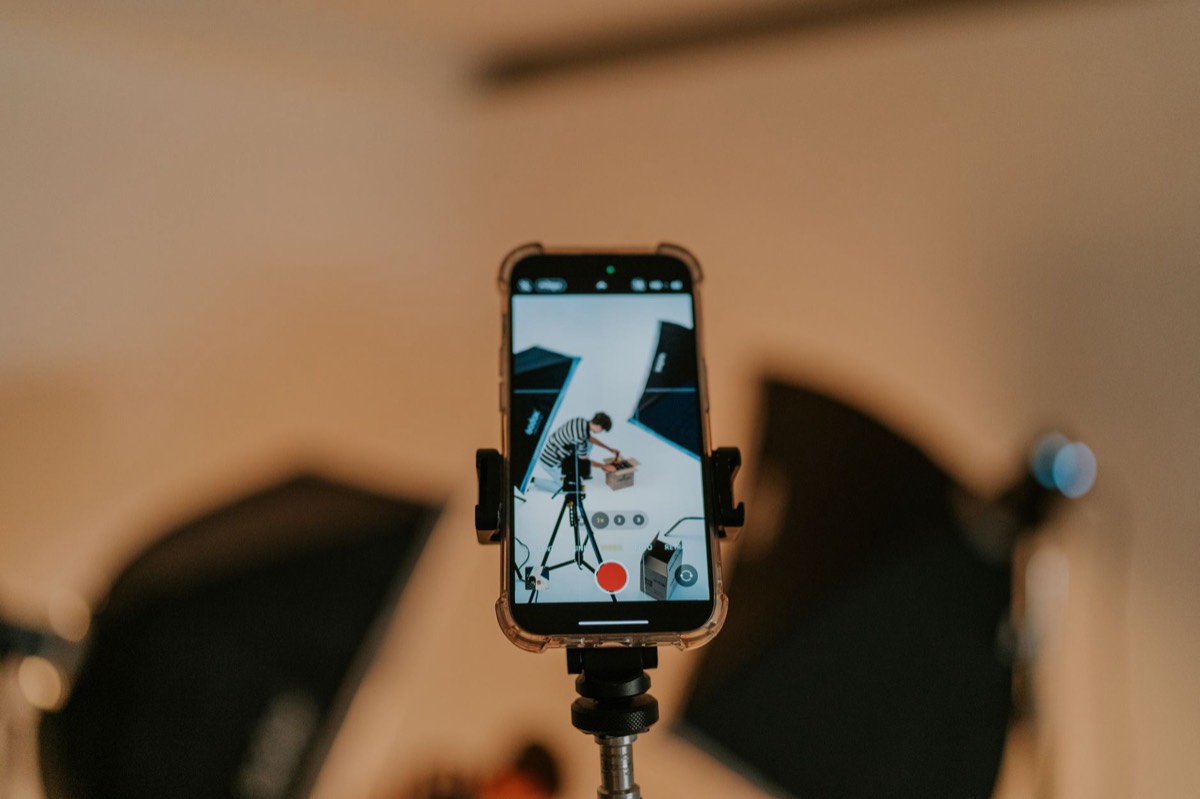
Most SaaS founders I talk to have quietly written off TikTok and Instagram. The reasoning is always the same: my product is B2B, my buyers aren't on there, and I'm not going to dance. I understand it — I spent fifteen years making video for brands before I built this tool, and I had the same reflex. It's wrong now, and the reason it's wrong has nothing to do with dancing.
The thing that actually changed

For most of the last decade, distribution on social platforms was won by accounts. You built a following, and the following saw your posts. If you had no following, you had no reach, and there was no way around it except time.
That is no longer how these two platforms work. TikTok's For You page and Instagram's Reels feed are both interest-graph distribution: the system shows a piece of video to a small test audience, watches what they do in the first three seconds, and expands or kills it based on that. Your follower count is an input, not a gate. A brand-new account with a good first three seconds outperforms a 50k-follower account with a bad one.
For a founder with no audience, this is the whole opportunity. You are not being asked to build a following. You are being asked to make a video that survives its first three seconds.
Why this matters more for small SaaS than for big SaaS
A large company advertises on these platforms by buying reach. You can't outspend them and you shouldn't try.
But there's a category of product that these feeds are unusually good for, and it's yours: software with a visible interface that does something people can immediately understand. A dashboard that fills in. A messy inbox becoming an organized one. A URL going in one side and something finished coming out the other. Those are visual transformations, and a visual transformation is the single most reliable thing you can put in a vertical feed. Nobody has to read anything. They see the before, they see the after, and the pitch is over in six seconds.
The products that struggle here are the ones with nothing to look at — infrastructure, APIs, things that live in a terminal. If that's you, the honest answer is that your effort belongs on other channels.
What actually goes in the video
Three things, in this order, and the order is not negotiable.
Seconds 0–3: the frame has to move. Not a logo. Not a title card. Not a slow fade-in. Something has to be in motion the instant the video starts, and it should be the interesting part of your product, not the introduction to it. Every analysis of what dies on these platforms says the same thing, and it's the rule I'm most aggressive about in the videos this tool makes: a static opening kills engagement before the algorithm has finished deciding whether to show it to anyone else.
Seconds 3–15: the transformation. Show the state before and the state after. Not features — outcomes. "Fourteen tabs of research" → "one summary." "Empty landing page" → "finished landing page." Your product's job in this stretch is to be the thing that happened in the middle.
Last 3 seconds: the name, and one reason to act. Not a full pitch. A name, and one line. People who are interested will find you; people who aren't were never going to read paragraph two.
The format problem, and why it eats most founders' attempts

Here's where good intentions usually die. Founders make one horizontal video for their homepage — 16:9, wide, designed to sit inside a page layout — and then post that same file to Reels and TikTok. It gets letterboxed into a thin strip in the middle of a phone screen, with black bars above and below, and it performs terribly. Not because the content is bad, but because it's the wrong shape and the platform reads it, correctly, as recycled.
Vertical is not a crop. In a 9:16 frame the safe area is narrow, the top and bottom get covered by the platform's own interface, and text that was comfortable at 16:9 is unreadable or clipped. A video built for vertical puts the important thing in the middle third, sets type much larger than feels necessary, and keeps motion in the center where the thumb isn't.
Making that second version by hand is real work, which is why most people don't, and why most SaaS founders' social video is a letterboxed homepage clip.
Where PromoHyper fits
This is the part where I tell you what I built, so read it as what it is.
PromoHyper takes your product URL, reads your site, writes a script, designs an animated video around your actual product screens and brand colors, and renders it. It produces 9:16 vertical natively — not a crop of a horizontal video, a composition designed for the vertical frame, with the type scaled and the motion placed for a phone. It takes a few minutes, and the first one is free.
The rule about the first three seconds is enforced in the system, not left to chance: the opening of every video is required to be in motion. That's not a marketing claim, it's a constraint in the tool, and it exists because I've watched too many otherwise-good videos die on a still frame.
You can see what these look like before you make one.
A real example, told honestly
I'll give you the one measurable case I have, with the parts that didn't work included.
I made a free promo video for a small product called Highlightz and put it on a page on my own site. Someone found that page, watched the video, signed up for PromoHyper, generated a video for their own product, watched their finished video start to finish, watched it a second time, and clicked through to buy a pack — all within about twenty minutes.
They didn't buy, because my checkout was broken that day and I didn't know it. That's the honest ending, and it's also the point: a single video moved a stranger from "never heard of this" to "getting out a card" in under half an hour. The video did its job. I was the broken link.
I'm telling you this instead of a viral-growth story because I don't have a viral-growth story, and I'd rather give you a small true one than a big borrowed one.
What to actually do this week

- Pick the one transformation your product performs. One. The one you'd show a friend if you had six seconds.
- Make a vertical video of it. Generate one here or make it yourself — but make it vertical, and make the first frame move.
- Post it to both platforms. Same video, both places. Instagram Reels and TikTok reward the same things, and cross-posting costs you nothing.
- Post consistently for two weeks before judging anything. The distribution is a test-and-expand system; a single video tells you nothing. Five tell you something.
- Watch retention, not likes. Both platforms show you where viewers dropped off. If they leave at second two, your opening is the problem — not your product, not your script, not the algorithm.
The part nobody says out loud
You will make videos that get four hundred views. That's not failure, that's the cost of entry, and it's dramatically cheaper than the cost of entry used to be. The upside case isn't a viral hit — it's that one of these lands in front of exactly the right two hundred people, and a handful of them are the buyers you've been trying to reach with cold email for six months.
You don't need to become a content creator. You need one video, in the right shape, with the first three seconds working.