How much does a SaaS promo video cost?
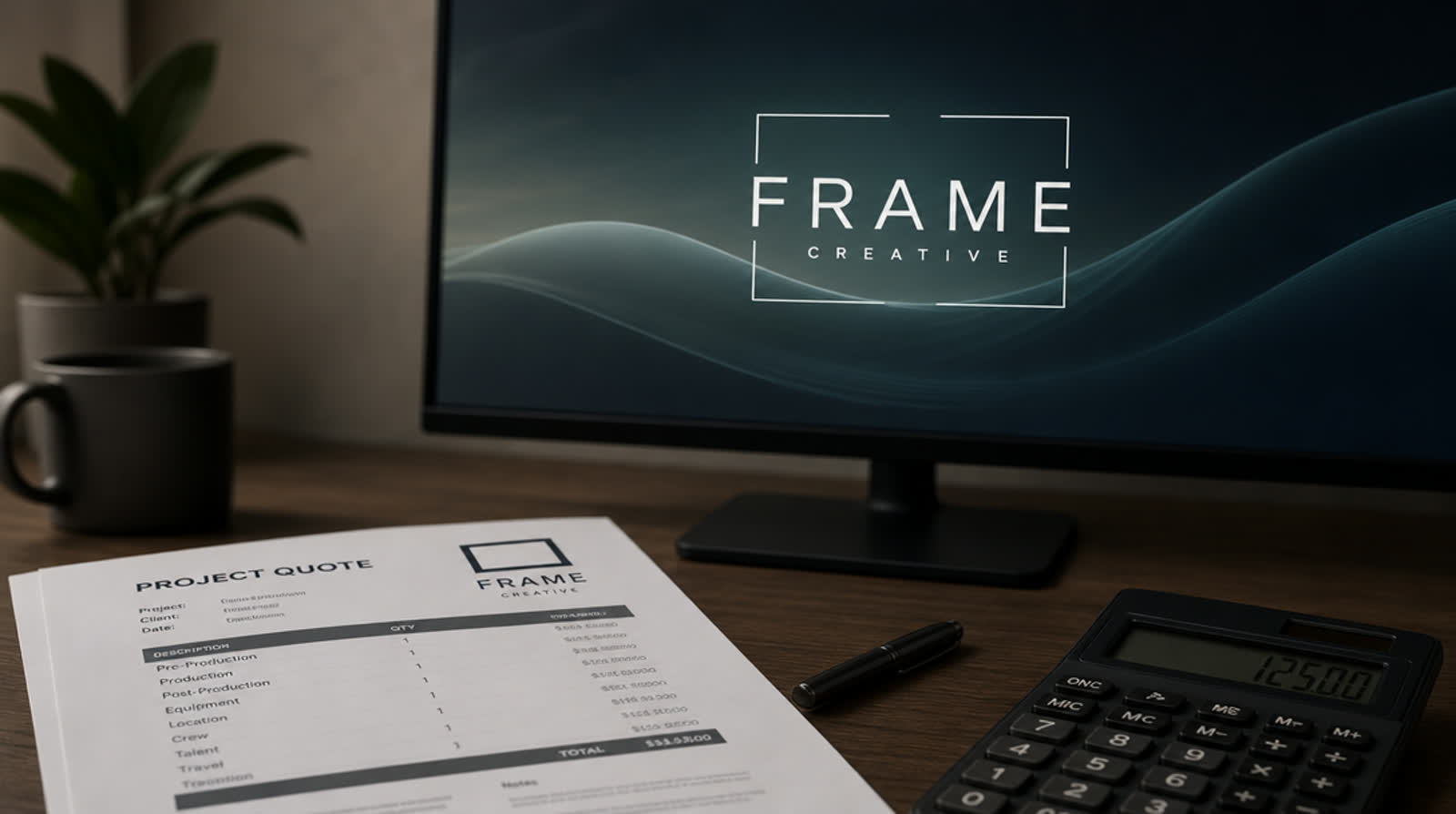
Ask five providers for a quote on the same 60-second promo and you'll get numbers so far apart they barely seem to describe the same job. A freelancer might come back with a few hundred dollars. A studio might come back with five figures. Neither of them is lying.
I've spent fifteen years on the production side of this, including the kind of budgets Microsoft, xAI and Cloudflare sign off, and the honest answer to "how much does a SaaS promo video cost" is: it depends on what you're actually buying. Most founders assume they're buying minutes of animation. They're mostly buying something else.
What the money actually pays for
Here's roughly where a video budget goes, in my experience, and it surprises people every time: the animation itself is a minority of it.
You're paying for discovery calls. For someone to learn what your product does. For a scriptwriter, or a generalist doing their best impression of one. For revision rounds, which means paying for the coordination around revision rounds: the emails, the versioned files, the week where nothing happens because a stakeholder is travelling. For project management. And, at an agency, for the agency's margin on all of the above.
None of that is waste, exactly. A good producer earns their fee by protecting you from your own indecision. But it explains why quotes vary so wildly: you're not comparing prices for a video, you're comparing prices for wildly different amounts of process wrapped around a video.
The three tiers, honestly

Freelancers. Commonly quoted from a few hundred dollars up to a few thousand, depending on experience and scope. The spread in quality is enormous. A great freelancer is the best deal in the market; a mediocre one costs you twice, because you pay again to redo it. You're also buying their calendar: one person, other clients, and a timeline that stretches when life happens. Expect to write a real brief and to project-manage it yourself.
Studios and agencies. Typical quotes for bespoke animated promo work range from around $1,500 to five figures, and the upper end is not unusual for a polished 60-90 second piece. What you get for that is real: a creative director with taste, someone whose job is to tell you no, bespoke art direction, and a process that has survived contact with hundreds of clients. What you also get is weeks of calendar time and a revision process with a meter running.
AI tools. This is the newest tier and the one I have an obvious stake in, so weigh accordingly. Pricing varies by tool and doesn't map cleanly onto the tiers above — subscriptions, credit packs and per-video charges all exist, so compare on what one finished video actually costs you. The honest trade: you give up a human creative director and bespoke, frame-by-frame craft on demand. What you get is speed measured in minutes, a first version cheap enough to throw away, and — with the better tools — a video actually designed around your brand rather than your logo dropped into a template.
The hidden costs nobody quotes

The line item that wrecks video budgets isn't on any invoice.
It's the second and third revision round, at whatever hourly or per-round rate applies, after the first cut revealed that nobody had agreed what the video was for. It's the script rewrite in week three. It's the launch that slips because the video isn't ready, which costs nothing on paper and quite a lot in reality.
Before you compare quotes, ask each provider two questions: how many revision rounds are included, and what does a round cost after that? The cheap quote with paid revisions and the expensive quote with unlimited ones are often closer than they look.
When paying thousands is the right call
I want to be fair to the expensive end, because I've worked in it and it exists for good reasons.
Pay for a studio when the video is the product moment: a brand film, a launch that defines the company for years, anything with live action, actors, or a motion system that has to be invented from scratch and then used everywhere. Pay for it when you need a creative partner who will argue with you, not a vendor who will render what you asked for. And pay for it when the video will live for years — a hero film amortised over three years is cheap per month.
That's a real category. It's also not what most SaaS promos are.
When the cheap tier is enough

Most SaaS promo needs look like this: a launch page next week, a landing page that converts better with motion on it, a short cut for ads or LinkedIn, a demo that shows the product doing the thing. The video needs to be clear, on-brand, and done soon. It does not need to win awards.
For that shape of job, the AI tier is genuinely enough now — with conditions. The tool has to read your actual brand rather than paste you into a template, the script has to say one specific thing (this part is still your job, and the cheapest way to make a SaaS promo video goes deeper on it), and you have to be willing to throw away a first version. Cheap iteration is the whole advantage; use it.
This is the slot PromoHyper, an AI promo video maker, was built for. You paste your product URL, it reads the brand, writes three script directions, voices the one you pick, scores it and designs every frame. The first video is genuinely free — one per account, with a PromoHyper watermark on it, no revisions and no card — so you can find out whether the tier is good enough for your job before spending anything. Clean, revisable files start at $29.
How to decide in one paragraph
Ask what the video is for. If it's a company-defining brand moment with a shelf life of years, hire a studio and pay properly. If it's a strong promo for a launch, a landing page or ads — which is most of them — try the cheap tier first, judge the result against what makes a good SaaS promo video, and only escalate your budget if the result actually falls short. Escalating is easy. Un-spending five figures is not.